
6 most important aspects of choosing an e-commerce engine

For the past 16 years I have been working with companies that are entering or modernising e-commerce. E-commerce is an interesting direction for companies because it is growing year on year. Also, thanks to excellent logistics and system solutions, it is easy to go to foreign markets with your offer. And this does not mean that you need to have warehouses in every country. However, it all starts with good decisions that do not block future growth opportunities.
If you already have an e-commerce site, but feel that you are blocked at some point, nothing is lost either. On the contrary! It might just be the right time to upgrade!
In a series of articles, we will go through the various issues surrounding e-commerce together. Today we will focus on choosing the right e-commerce engine for your business. Let's start with your budget.
Budget
It is a known fact that everything costs money. Also, implementing a new e-commerce engine will require a budget. A well-planned budget should not only include external costs, but also how much the company will spend on resources and materials internally.
In addition to this, at this stage, you should also look at the costs of maintaining and supporting the platform after implementation before making a decision. What I am talking about here is what the OPEX will be. Whatever e-commerce engine you choose, some of the costs will be similar, but some will depend on what you choose.
Projects that are ultimately successful also tend to look further into the future. How can e-commerce evolve and what might your organisation need in the future? Looking at a platform from this angle may mean that the most points will not be collected by the cheapest one, but one that has ongoing support from the vendor and follows or even sets trends.
What I want to say is that the cheapest solution should not always take precedence. The dynamics in e-commerce are so great that after only a few months or so, the limitations of the engine may become a real threat to business growth. That is why it is worth consulting an experienced e-commerce implementation partner. But not one that only does technical work. This is where you need a business partner.
To summarise:
1. When choosing an e-commerce engine, pay attention to external costs (e-commerce implementation, suppliers/vendors), but also internal costs.
2. Ask your chosen implementation partner(s) to estimate the maintenance costs (OPEX) of the platform.
3) Don't just go by price, but by the value the engine/platform gives. And how it future-proofs your business as it grows and develops.
Scalability
A river topic and a concept used very often, but what does it really mean?
There are two main aspects of real scalability that matter:
1. technical scalability, or in other words capacity. Here I am talking about the capacity to take large volumes of orders, products, customers and traffic. Even an unexpected increase, such as during an advertising campaign, that will work very well.
2. business scalability, or in other words, flexibility, which will provide opportunities for future growth and integration. It will not block your business, through poor architecture. Or after some time of adapting to the needs of the business it will simply start to work so slowly that you either can't develop it further or it will work in such a way that no one will want to buy through it.
In either case, the platform or engine should grow as the business grows.
To summarise:
1. the scalability of the platform now may not be crucial, but as the business grows, it could prove to be a major obstacle to further business goals.
2. it is worth paying attention to the architecture of the platform so that choice does not stand in the way of future growth. Not only the size of the business, but also the ability to make changes to the platform / e-commerce engine.
Marketing tools
Customer interaction possibilities, promotion engine possibilities, newsletters, personalisation, visual merchandiser, virtual categories, etc. etc. One could go on for a very long time, but that is not the point. What is important is the marketing needs and plans now and how they change over time.
Choosing an e-commerce engine that has a rich set of tools for marketing is crucial. Because using these tools creatively will certainly set you apart from your competitors.
The topic is very broad, but let's try to look at it from the side of the customer growth path i.e. Customer Journey. Let's assume that a customer has never heard of your brand. At some point, he or she will come across an advertisement on the Internet, a social network, or even at a family gathering hear from a cousin that such a company, makes good products.
A first interaction with your shop follows. The first impression matters. The website runs fast (at least it should - and this also depends on the e-commerce engine). The search engine returns results quickly. Accurate results. The category page is laid out according to the logic of your marketing department. On the product card (which is structured in a modern way, with good descriptions and a beautiful image gallery), there is not only basic information, but also reviews, ratings and related products. She will not make a purchase yet. He will do so later.
The customer enters the shop next time. The homepage is sort of tailored to him. Because the shop remembers what the customer browsed last time. The banners reflect what the customer is interested in. Now finding a product is trivial. In fact, the dream products follow the customer.
Adding to the basket and the purchasing process is simple and pleasant. Payment, too. At the end of the process, a thank-you note and immediate notifications that emails regarding the order will already be in the inbox.
In the following days, the customer receives various communications indicating that he is being taken care of. However, he wants to ask something. He calls you on customer service. Quickly, the person on the other end of the phone finds the order and gives precise information. The customer waits happily for the package. After receiving it from the courier, he immediately gets a request for feedback. His impressions of the purchasing process. He gives this feedback. In a few days, he emails again and is asked for his opinion on the product. Satisfied with the quality of the goods themselves and the service he is happy to give 5 stars.
I don't know about you, but for me great. However, there is a catch here. Not all platforms will easily allow you to focus on the customer path (customer journey). They will be distracting, failing to work this and other mechanisms. Instead of focusing on the work and fine-tuning the customer, you will have to talk to the technical team and describe bugs.
This is not the way to go. Not the way...
The availability of marketing tools is something that differentiates successful shops from those that are struggling. I'm not saying that all tools for personalisation, email marketing etc should be built in. The aim is to select an e-commerce engine that connects easily and reliably with other tools. So that you don't think about whether it will work now. Just to be sure of it and focus on the customer. This always pays off.
To summarise:
1. not all the necessary marketing tools an e-commerce engine needs to have built in. But the ones it has work stably, and it should be possible to connect to the rest. Easy to connect to.
2. your company's e-commerce platform should work stably so that the various departments that will be working on it can focus on their tasks, not reporting bugs. It is worth bearing in mind that part of the success depends on a good supplier. Choosing a company by its experience is key. It is worth talking to companies that have projects with it. At Monogo we always offer the opportunity to talk to our Partners. They will tell you best how to work with us. And we do this because one of our values is transparency.
The tools available must be used creatively. To do this your team should be trained. But not so that only training takes place. The supplier should teach people to work with the new tools.
Integrations
I have touched on the topic of integrations several times before. Because basically, currently, there is no online shop without integrations. Indeed, even more! There is no website without integration.
Please note that this is now going to be a bit technical. An online shop engine should be able to connect to other systems via, for example, an API. In addition to this, it can have native and out of the box integrations.
Native integrations are where you can use an extension to achieve the effect of connecting your web shop with a 3rd party. With a third-party supplier.
Out of the box integrations are anything that the e-commerce platform connects to and comes bundled/packaged/from the manufacturer/out of the box. It is important that the out of the box e-commerce engine provides the ability to connect to standard analytical and marketing tools. However, native integrations if they occur to logistics operators, payment gateways and other marketing tools will quietly suffice.
And the aforementioned API will come in handy if someone from outside needs to broadcast information to your shop. A good example would be the exchange of order information - e.g. order status. It is common to see this data coming in via API. Or flat files. But let's not go into any more detail. Your IT department should know exactly what is needed for a smooth integration.
The last point worth mentioning in the area of integration is personalisation. It's rather hard to get a platform that has this built in. Maybe minor elements. Rather, you need to prepare for the fact that the personalisation engine and CDP (Consumer Data Platform) will be out there. You could learn more about it on this article: The power of personalization in e-commerce
For example, Adobe Commerce (Magento) has a tight integration with Adobe Experience Cloud tools. And everything is there, personalisation, campaigns, CDP, analytics, etc. Such a tight and simple integration can prove to be a lifesaver. Because you can quickly connect the whole ecosystem together and implement personalisation for customers. And they will return the favour. Just as quickly. By making frequent purchases.
To summarise:
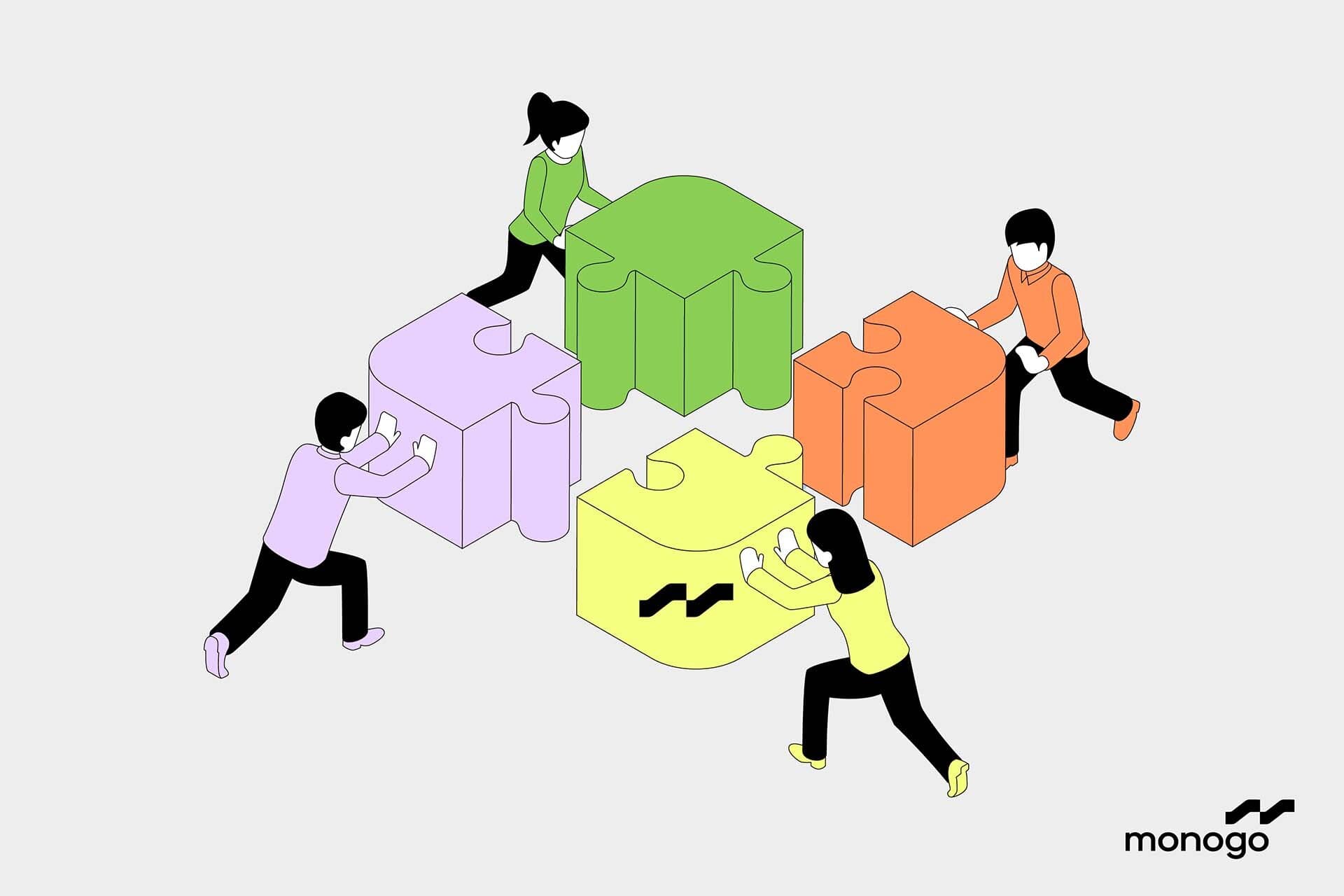
1. the e-commerce engine should be able to easily connect to other tools and systems. The most common methods are: APIs, native integrations and what is provided by the manufacturer in the box of the e-commerce engine.
2 When choosing, it is worth considering the opinion of the IT department. Information exchange with ERP or WMS systems will be key. It is worthwhile that this area is taken care of without problems and works stably.
3) I recommend having a look around to see what other tools, if any, the web shop engine manufacturer provides. If you buy more tools from one manufacturer, you can count on discounts and better integration in the area of the entire ecosystem. Again, this makes life easier and allows you to focus on customer acquisition and service.
5. Availability of specialists
Imagine the situation. You have a supplier. The cooperation is going well. But you don't know if the supplier will not be bought. You don't know if some perturbation is waiting around the corner that will lead to you having to change him. Seems like an unlikely scenario? Then listen to this.
Over the last three years at Monogo, 70% of the projects we joined as lead suppliers were projects taken over from other companies. The reasons varied, but these things happen. It is better to be prepared for this. It is worth checking what other partners supporting your chosen online shop engine you find on the market. Hypothetically even.
In addition, I recommend making sure how healthy and active the community of the e-commerce engine in question is. For example, Adobe Commerce not only has an ultra-active community, but the manufacturer also cares a lot about the partners. There are periodic meet-ups with us, like this event Adobe x Monogo, Adobe Partner Day in Warsaw.
An active and lively community also provides constant feedback to the manufacturer. What to add, what to change, what do customers expect, etc. etc.? This makes a really big difference.
To summarise:
1. when choosing an engine, see who can carry out the implementation of the online shop, provide post-implementation support (Application Support), but also alternatively whether there are other options on the market that may suit you.
2. When choosing an online shop system, it is worth looking at how strong the community is. How the community is supported by the manufacturer.
3. Choosing specialists for implementation and maintenance is not easy. Our statistics confirm this. A vendor company that has implemented and is value-based is potentially a good direction to start with.
6. Awareness of needs and what the boxed engine offers
Every company has its own needs. Every company also has something unique. A specific competitive advantage. It would be good on an e-commerce platform to have this advantage. To attract customers and convince them to buy. When it comes to a platform, to start with, it doesn't have to have everything one would like to have. Watching companies that are successful in e-commerce, I come to this conclusion.
Therefore, we often, at Monogo, suggest a platform that will provide plenty of room for growth. And we recommend dividing the product (which is an e-commerce ecosystem project) into logical parts. We start with a fully functional platform armed with the necessary features. And over time we develop it by adding new Service Packs. Which increase the number of available functions.
In this way, we implement operte platforms with Adobe Commerce and Shopware.
It's good to keep in mind that a new system, is also something completely new for your team. And the team needs time to learn to work with it. Well, unless the chosen platform is very familiar to the people working on it. But this is often not the case.
The most important thing, is to start selling. To start building a customer base. Or to remove the blockage in the form of a system that doesn't offer opportunities for growth.
By breaking it down into phases, you won't need a huge budget to start with. The project itself will also be shorter. Which will make it quicker for your customers to start buying on your new online shop platform.
In conclusion, I want to thank you for reaching the very end. I hope you found the article valuable. I would be happy to answer your questions. Just give me a call or write!