
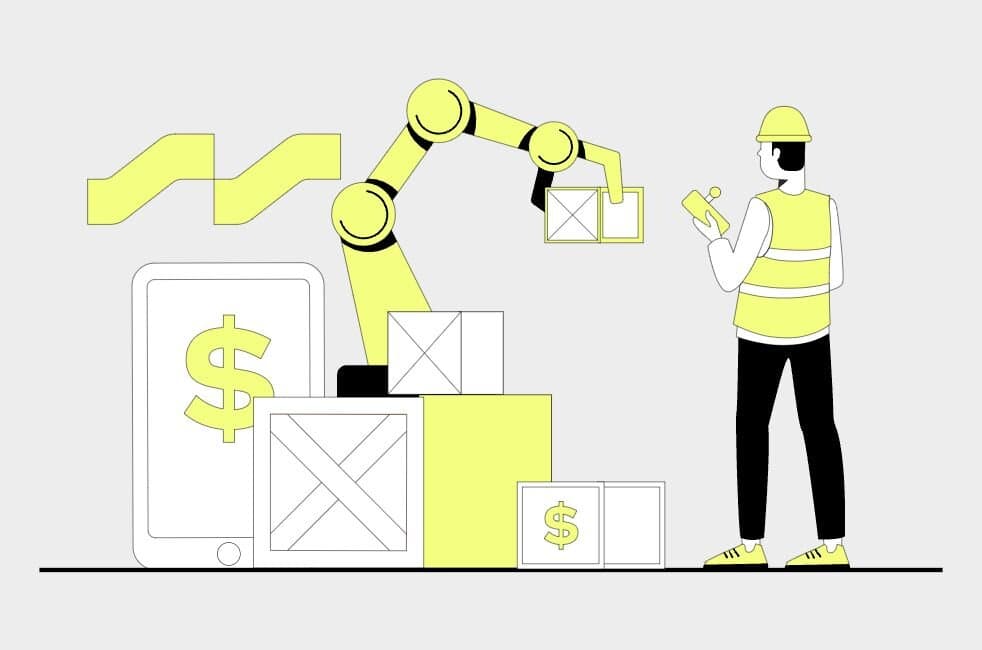
RPA in e-commerce

Nowadays, one of the most effective methods of developing an online store is automation. With the advancement of technology, companies are very often choosing to robotize their processes, mainly to save time, money, but most importantly not to fall behind the competition. In this article I will explain to you what RPA is and what benefits it offers to business?
What is RPA?
RPA (Robotic Process Automation) is an information technology that enables the automation of repetitive, manual tasks performed by employees in an organization, such as entering data, sending emails, processing documents or generating reports.
RPA uses software robots, or special software that mimics human interaction with IT systems. As a result, robots can perform the same activities as humans, but with greater precision, speed and without errors. RPA can operate 24/7, saving time, costs and increasing the efficiency of an organization's operations.
Examples of RPA applications include automation of financial processes (e.g., accounting, invoicing), HR processes (e.g., recruitment, employee service), logistics processes (e.g., warehouse management), and customer service (e.g., automatic responses to emails or chats)
Benefits of introducing RPA in e-commerce
Modern business poses many challenges for companies, and one of them is to increase the efficiency of operations while reducing costs. This is where RPA (Robotic Process Automation) can be of great help. It's an information technology that makes it possible to automate repetitive, manual tasks performed by employees in an organization, such as entering data, sending emails, processing documents or generating reports.
One of the main beneficiaries of introducing RPA into an organization are the employees. By automating processes, employees can focus on more valuable tasks, such as developing business or building customer relationships. RPA can also help reduce costs associated with hiring employees to perform repetitive tasks, saving funds to hire specialists in other areas.
RPA can also improve the quality of tasks performed. Because software robots eliminate errors due to human factors, an organization can increase the precision and quality of its business processes. In addition, automation allows tasks to be completed faster, resulting in increased efficiency for the entire organization.
The implementation of RPA also contributes to an improved customer experience. By automating processes, an organization can speed up customer service, which translates into improved customer satisfaction related to the company's service. Process automation can also help conduct better analysis of data related to customers, allowing the delivery of more personalized service.
You can read more about the benefits of personalization in the article The power of personalization in e-commerce.
What kind of companies is RPA for?
Robotic Process Automation is a good solution for a wide range of companies, regardless of their size, industry or the type of tasks they perform. In fact, any organization that has business processes can benefit from RPA.
However, it can be especially beneficial for companies that have large amounts of repetitive, manual tasks, such as processing documents, entering data, generating reports or sending emails. RPA can greatly speed up and streamline these processes while saving time and costs, which can be especially important for companies that operate in highly competitive industries.
RPA can also be particularly useful for organizations that want to scale up their operations without having to increase their headcount, or when they have difficulty recruiting specialists to perform repetitive tasks. Automating processes can help save costs and focus employees on more valuable tasks, such as analyzing data or developing business strategy.
Finally, RPA can benefit organizations that want to improve their customer relationships through faster and more personalized service delivery. Process automation allows organizations to speed up customer service and better analyze customer-related data to deliver more personalized service.
In summary, process robotization is a good solution for any organization that wants to increase the efficiency of its operations, reduce costs, improve the quality of tasks performed, increase the scale of operations, enable continuous operations and improve customer relations.
RPA in e-commerce - where to start?
Implementing RPA (Robotic Process Automation) is a process that can bring many business benefits, such as increased productivity, reduced costs and increased quality of work. To begin the process of implementing RPA in your organization, there are several key steps to follow.
First, it's a good idea to identify the goals you want to achieve through business process automation. Do you want to increase productivity, improve the quality of work, reduce costs or perhaps implement new products or services? Determining your goals will help you select the processes that are best suited for this. Conduct an initial assessment of your IT environment. Make sure your systems are ready for RPA implementation and meet the requirements. Conduct a security audit to make sure your systems are secure and protected from threats.
Next, it's a good idea to choose the right RPA platform. There are many different platforms on the market, it is worth choosing the one that best suits your needs. Make sure the platform has the right features and capabilities, such as ease of use, integrations with other systems and support for different types of robots. It's a good idea to test several different platforms before making a choice.
After choosing a platform, prepare a project team that will be responsible for implementing RPA. The team should consist of various specialists, such as RPA engineers, business analysts and IT security specialists.
The next step is to conduct testing to make sure that the processes you are automating are working properly. Testing is important to avoid errors and minimize the risk of introducing automation that works incorrectly.
The final step is to implement RPA. Once you have tested and ensured that your processes are ready, you can proceed with implementing the automation. Remember that RPA implementation is an ongoing process and requires constant monitoring and optimization to get the best results.
At Monogo, we work together with the client on RPA implementation offering professional support at each of the stages mentioned above. Thanks to a precise analysis of business needs, we are able to address topics according to priorities with the greatest impact on your business.
Summary
Is RPA a good solution for your business? If you see areas to optimize your company's processes, save time and money, then the answer will always be yes. Business can't stand still, running an online store is a constant development. Artificial intelligence and robotics solutions don't have to be complicated processes that generate huge implementation costs. They are sometimes simple improvements that, when implemented in your business, will bring a return on investment almost immediately.
If you would like to talk about the possibilities of automating processes in your company, leave your contact in the form. We will arrange a free consultation to talk about robotization solutions that will work for your business.