
Omnichannel and user experience - how to design to multichannel to increase sales?

It would seem that implementing a working omnichannel strategy is the icing on the cake. The answer to the hedonism of users who want the perfect shopping experience. Our company supports most channels, our brand is present everywhere and products are visible and accessible to people regardless of the platform or where they physically make their purchase. However, mere presence in multiple channels is only multichannel.
Omnichannel is more than that, it is the immersion of the user in the world created by the brand. It's seamless and imperceptible transitions between channels during a single and consistent experience, such as a shopping experience.Why is it important to think during designing solutions about the full ecosystem surrounding the user and not just a slice of the user's path? What makes omnichannel not an optional but standard for the user? And finally, how to think about multichannel strategy? You could read about this in this article.
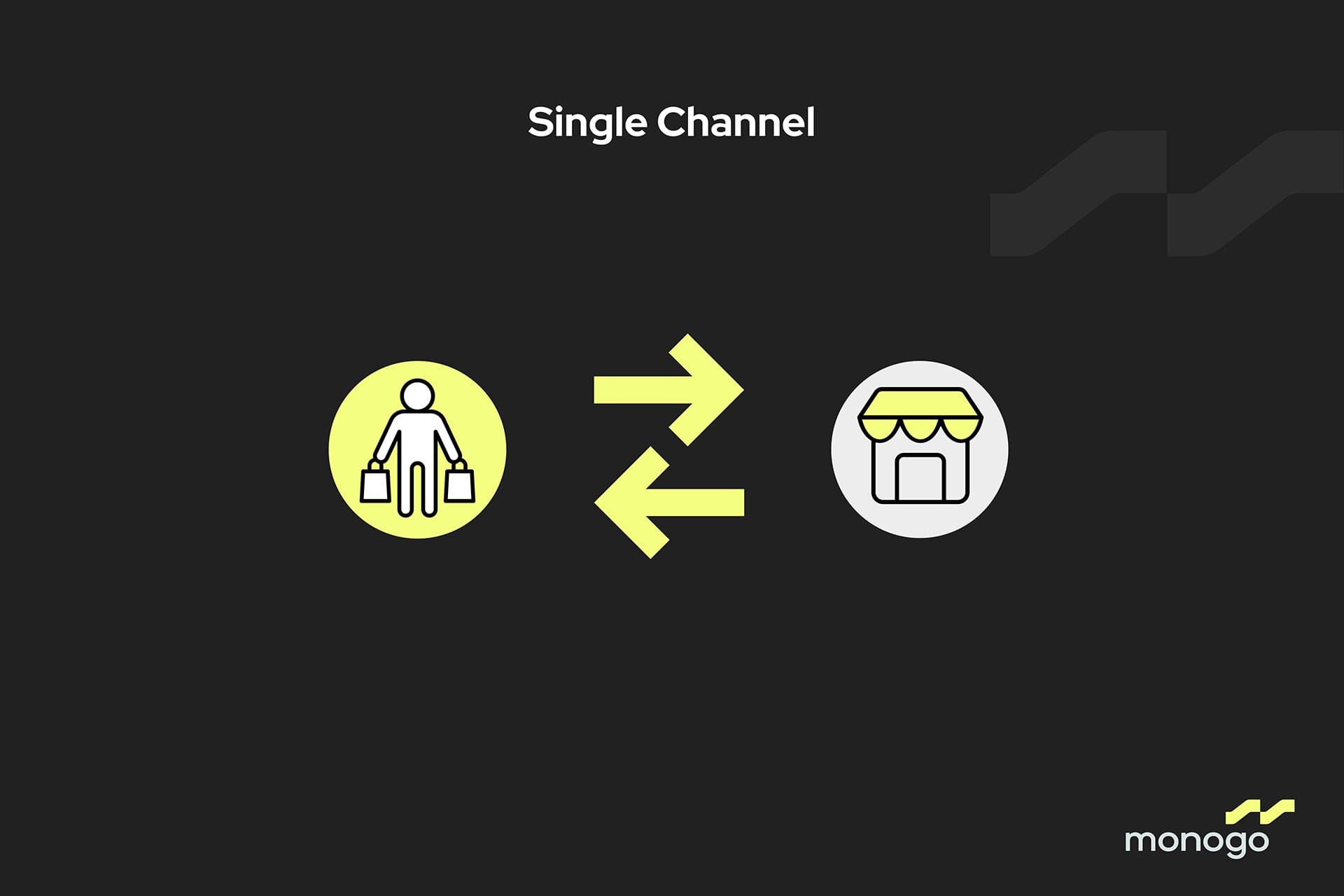
Single Channel Commerce - one sales channel to reach the customer / monogo.pl/en
Customers value their time and will never return to a brand that they think works illogically. And it's illogical that when I choose a personal pickup at a store two streets away, I have to wait 3 days for the goods to be delivered there. Moreover, I find out about it after I've already ordered. This particular story ends with the customer driving around the physical stores, buying new shoes at the store in the neighborhood next door (or at a competitor's), and never picking up the goods brought down to the store. Because why should he?
The world is speeding up, and the times where a customer is willing to wait - whether for a service or a product -never goes back. So brands are speeding up, too. They are beating themselves up to satisfy the customer as quickly as possible, to deliver what they expect under their noses. There used to be 3-5 days waiting for a shipment, today the standard is second-day delivery, but customers want more. They expect the product already, now. To meet this expectation, we need to develop fine-tune logistics or... give the customer a well-cut omnichannel experience. The case described above leads the customer to the conclusion - why do I need 'click&collect' functionality if I have to wait 3 days for the package anyway and still drive to the store to pick it up. This is, from his perspective, absurd.
Omnichannel, as seen by the customer, is a process of adapting the most important features of a channel in another channel. And as in the example above - the customer expected information about product availability. This is specific to the online channel - in every e-commerce store we have information about product availability (PIM system). We don't have information in every channel about the location of the physical store, where the client will find that product and be able to pick it up there, by paying online in advance. There are hundreds of examples of customer expectations of 'functionality' from one channel to another.
A major challenge for stationary stores is to transfer the experience characteristic of e-commerce stores from the digital world to stationary service points. Sitting in front of a laptop or with a smartphone in hand, I am able to read reviews, whether written or in video form on influencer profiles. Customers expect the same experience in physical stores. Brands that extend stationary visits with experiences specific to the online channel are winning business. And so, for example, adding a QR Code next to the price allows customers to quickly open the site, read reviews and personalize a particular product, and order it with home delivery right in front of the shelf. The latter fact is extremely important for large-size products.
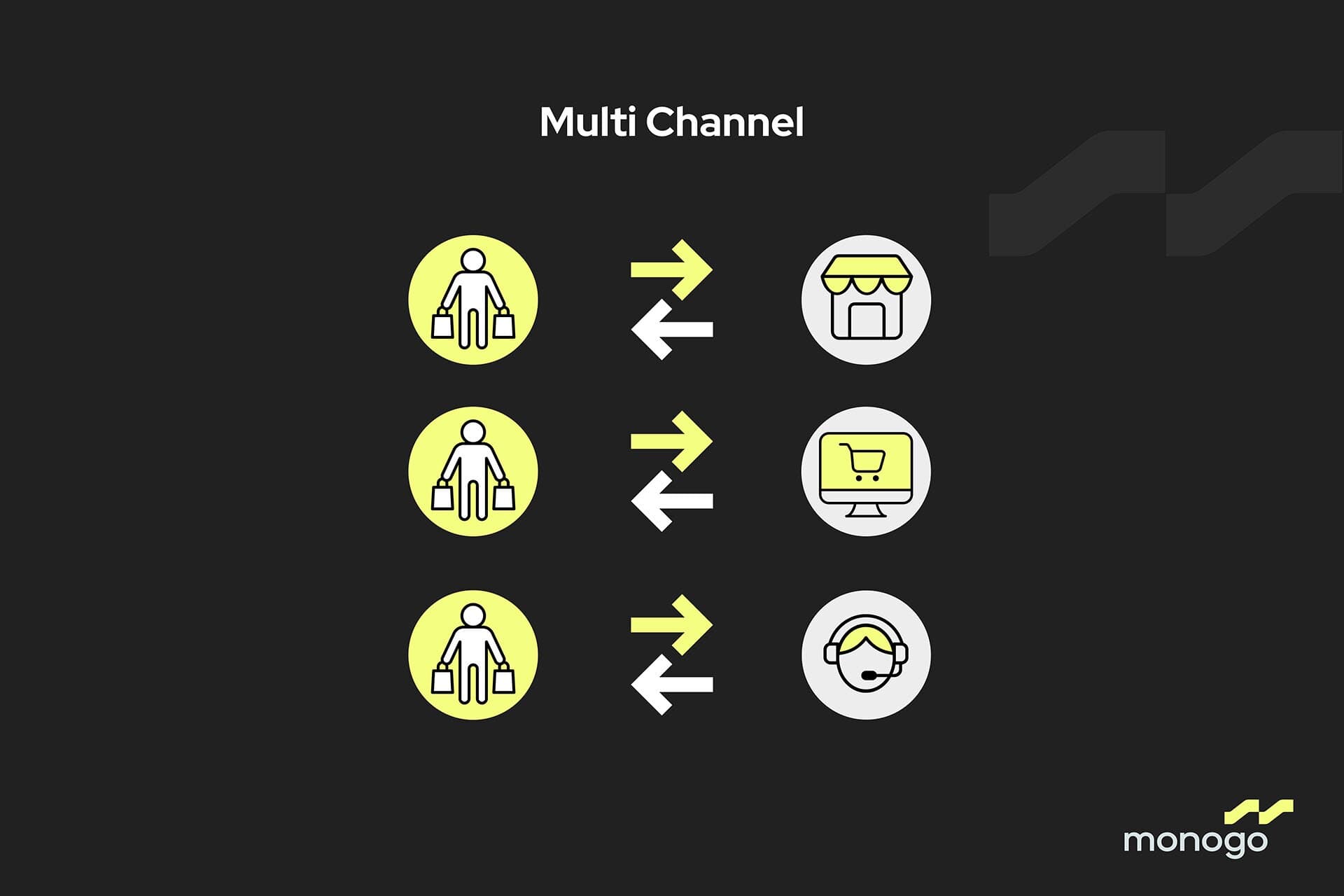
Multi Channel Commerce - the way of reaching customers with the product multichannel, without integration between channels. / monogo.pl/en
Omnichannel as an opportunity for brands
I wrote earlier that if you work in the IT industry you realize the size of the undertaking you face when you want to implement an omnichannel strategy. That is a big challenge - it's an integration - of everything, with everything. And you're right. However, you need to keep in mind that other brands are already doing it, winning industry awards and... making a quick profit. According to statistics, omnichannel provides 80% more additional visits to stationary stores, 89% of customers return, the purchase frequency is 250% higher, and year-on-year profits grow by an average of 9.5%.
What is the reason for this? From a simple fact - omnichannel provides customer engagement at a level never before possible. Keep in mind that you are not only selling a product, but also the emotions associated with it. The shopping experience is also part of the lifestyle. That's why Eva Minge installs virtual mirrors, in which you can try on products not available in a physical store, change your current makeup, send yourself the entire creation to your account and make a purchase at your convenience online. Starbucks (USA) allows you to order coffee via the app, for a specific time and pick up your order at the coffee shop of your choice. The Disney Experience App, on the other hand, allows you to plan a visit to a Disney park in advance and interact via the app with the exhibits there. Carrefour allows you to scan products with your phone in physical stores and pay with a card linked to the app (scan&go). The examples are numerous. However, the omnichannel strategy should be carefully tailored to the business and industry.
If you rely on quick pickup of purchases ordered online in a physical store ,you need to ensure a high availability of goods in selected stores, and for this you need a large area. You can also make something totally different and bet on small stores, called showrooms. In showrooms you could only see the product and your order will be delivered from another store directly to your home. However, regardless of the type, form of business and strategy, you will have the ability to collect user data from all channels in one place. A single, consistent loyalty program also has an advantage for the user - it is more pleasant to use. So-called seamless experience. Zero cards, zero vouchers, coupons, etc. One program that collects points, rewarding the most loyal customers.
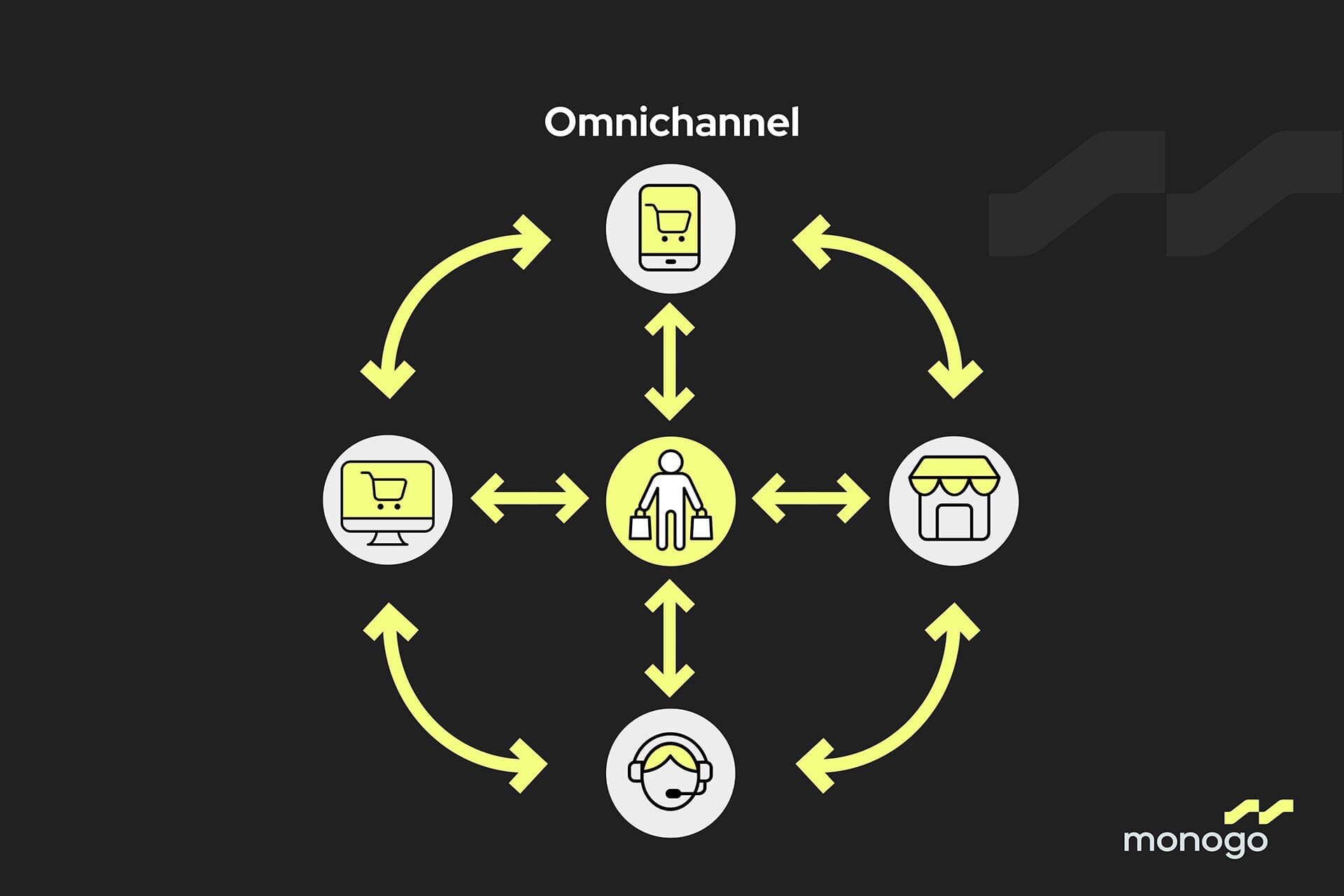
Omnichannel Commerce - a multi-channel customer outreach structure with integration between many channels. monogo.pl/en
How to design omnichannel?
If you want to implement an omnichannel, you should always look at the current problem from a broad perspective. Are you designing an online store? Do you have stationary stores? Great! Think about how you can use them in the online shopping process. You don't necessarily need to start with NASA technology. During the process you need to remember a few key principles.
A well-designed basic process for picking up an online order in a store is the easiest part of the process? Not necessarily. Recall how many stores ask for a delivery address when you choose in-store pickup? Or... how many times choosing a pickup location on checkout has turned out that just that product isn't there, despite the fact that inventory is available online. Remember, your logical mistake in designing the shopping process means hundreds of abandoned shopping carts in your store. A broader perspective allows you to see the inconvenience of standard processes.
Why not ask the user how he or she intends to receive the purchase and, once the user has chosen a location, limit the products to only the assortment of the selected store? Omnichannel design requires the team to take a holistic view of the user's path. I wrote about why the customer should be at the center of your business in the article The Power of Personalization in E-Commerce, but I'll remind you again how important the user is in the whole process of online store design. Knowing your market and your customer also helps you develop your store later on.
It is a good practice to prepare an ideal omnichannel path and divide the implementation into stages. By designing the store itself as a single point, without analyzing the other moments of contact between the user and the brand, we often make bad business decisions that are sometimes irreversible or consume huge amounts of money. At Monogo, during creating ux and designing digital solutions for our clients, we always precisely define the customer journey based on data and analysis. This helps us make sure that the mock-ups and solution prototypes designed by us, respond to real customer needs at every stage of the order.
Where to start?
Omnichannel design requires a unique understanding of customer needs and addressing them in products, multichannel. Along the way, we need to consider many important aspects such as system integrations, ensuring consistency, and personalization. That's why it's worth investing your time and money to take a professional approach to omnichannel strategy. I know, from experience, that a well-designed omnichannel customer experience translates into real profits. Diversification of channels to reach the user obliges you to maintain the standard of presentation and delivery of services and products. If you want to avoid mistakes and increase the sales potential of your store, get back to me. I'll be happy to help.
